
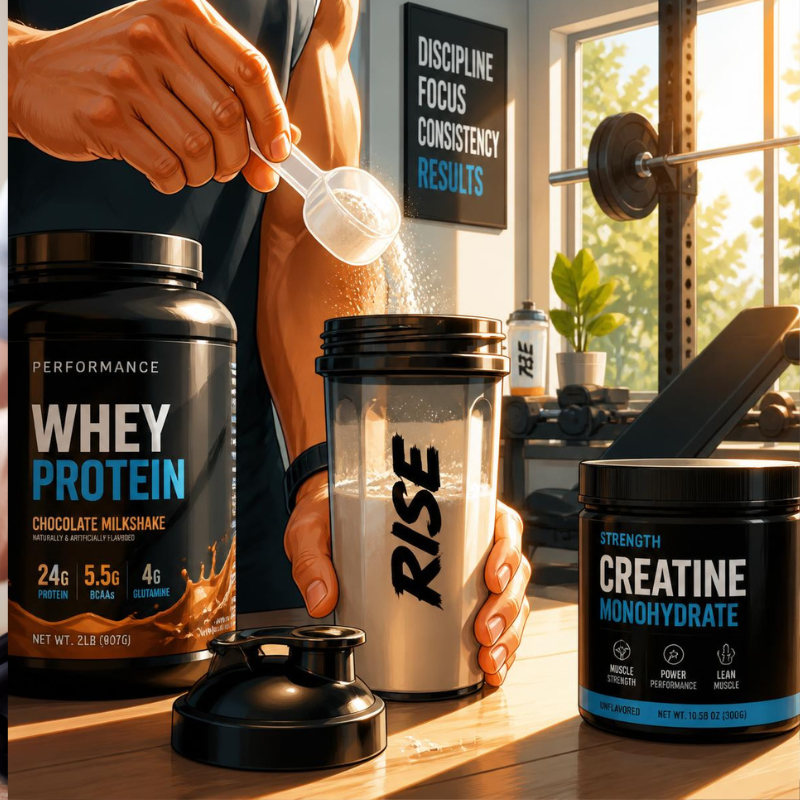
The Benefits of Creatine and Protein After Workouts: A Science-Backed Recovery Guide
The Benefits of Creatine and Protein After Workouts: A Science-Backed Recovery Guide
What you do after a workout can be just as important as the workout itself. While resistance training creates the stimulus for muscle growth and strength gains, your body needs the right nutrients to recover, repair, and adapt.
Two of the most researched and effective supplements for post-workout recovery are protein and creatine. Together, they help replenish your muscles, support recovery, and improve long-term performance.
Whether your goal is building muscle, increasing strength, improving athletic performance, or preserving lean mass while losing weight, understanding how these supplements work can help you maximize your training results.
Why Post-Workout Nutrition Matters
During exercise—especially strength training—your muscles experience microscopic damage. This process is completely normal and is the trigger for muscle adaptation.
Recovery requires:
- Amino acids to repair muscle tissue
- Energy to replenish glycogen stores
- Water and electrolytes for hydration
- Adequate rest and sleep
- Consistent resistance training
Protein and creatine support different aspects of this recovery process, making them complementary rather than competing supplements.
What Is Protein?
Protein is made up of amino acids, which are the building blocks your body uses to repair and build muscle tissue.
After resistance training, muscle protein synthesis (MPS)—the process of building new muscle proteins—increases. Consuming enough high-quality protein provides the amino acids needed to support this process.
Excellent post-workout protein sources include:
- Whey protein
- Greek yogurt
- Chicken breast
- Lean beef
- Fish
- Eggs
- Cottage cheese
- Soy products
- Protein shakes
Benefits of Protein After Exercise
1. Supports Muscle Growth
Resistance training stimulates muscle protein synthesis, but dietary protein provides the raw materials needed for muscles to repair and grow.
Research consistently shows that consuming adequate daily protein supports increases in lean muscle mass when combined with resistance exercise.
2. Improves Recovery
Protein helps repair muscle fibers damaged during training, reducing recovery time between workouts.
Faster recovery often means:
- Less muscle soreness
- Better workout performance
- Improved training consistency
3. Helps Preserve Muscle During Weight Loss
When reducing calories, adequate protein intake helps minimize the loss of lean muscle while encouraging fat loss.
Maintaining muscle also supports a healthier metabolism.
4. Increases Satiety
Protein is more filling than carbohydrates or fats, helping many people stay satisfied longer and making it easier to adhere to nutrition goals.
How Much Protein Do You Need?
Protein needs vary depending on your goals and activity level.
General recommendations for active adults range from:
- 1.2–2.0 grams of protein per kilogram of body weight per day
Individuals focused on maximizing muscle growth may benefit from intakes toward the higher end of this range.
Rather than consuming all your protein at once, aim to spread intake across multiple meals throughout the day.
What Is Creatine?
Creatine is a naturally occurring compound found primarily in skeletal muscle. It helps regenerate adenosine triphosphate (ATP), the body's primary energy source for short, high-intensity activities like lifting weights and sprinting.
Although creatine is found in foods such as red meat and fish, supplementation is often used to increase muscle creatine stores more effectively.
Creatine monohydrate is the most extensively researched and widely recommended form.
Benefits of Creatine After Workouts
1. Increases Strength
Creatine supplementation consistently improves performance during repeated high-intensity exercise.
Over time, this allows many people to lift heavier weights or complete more repetitions, supporting greater strength gains.
2. Supports Muscle Growth
Creatine promotes greater training volume and may increase water content within muscle cells, creating an environment that supports muscle growth when combined with resistance training.
3. Improves Recovery Between Sets
By helping replenish ATP more quickly, creatine may improve performance during repeated bouts of intense exercise.
This can lead to more productive workouts.
4. Supports Lean Muscle Mass
Long-term creatine supplementation combined with strength training has been shown to increase lean body mass in many individuals.
5. May Support Brain Health
Emerging research suggests creatine may also play a role in cognitive function and brain energy metabolism, though more research is needed in this area.
Should You Take Creatine After Your Workout?
One of the most common questions is whether creatine should be taken before or after exercise.
Current evidence suggests that consistency matters more than precise timing. Taking creatine daily is the key to maintaining elevated muscle creatine stores.
Some studies suggest that consuming creatine after exercise alongside protein and carbohydrates may slightly enhance uptake, but the overall differences appear to be small.
The most important habit is taking it consistently.
Can You Take Creatine and Protein Together?
Absolutely.
Protein and creatine work through different mechanisms, making them an effective combination.
A simple post-workout shake might include:
- 20–40 grams of protein (depending on individual needs)
- 3–5 grams of creatine monohydrate
- Water or milk
- Optional fruit for carbohydrates
This combination supports muscle repair while ensuring muscles remain saturated with creatine over time.
Do You Need a Loading Phase?
Many people begin creatine supplementation with a loading phase of:
- 20 grams per day (split into four 5-gram servings) for 5–7 days
This rapidly increases muscle creatine stores.
However, loading is not required.
Taking 3–5 grams daily will also fully saturate muscle stores—it simply takes a few weeks longer.
Common Myths About Creatine
Myth: Creatine is a steroid.
False. Creatine is a naturally occurring compound and is not an anabolic steroid.
Myth: Creatine damages healthy kidneys.
Current evidence indicates that creatine supplementation at recommended doses is safe for healthy individuals. People with kidney disease or other medical conditions should consult a healthcare professional before using creatine.
Myth: Creatine causes dehydration.
Research does not support this claim when users stay adequately hydrated.
Myth: Protein damages healthy kidneys.
High-protein diets have not been shown to harm kidney function in healthy individuals. Those with existing kidney disease should seek medical advice before increasing protein intake.
How evol Helps Optimize Recovery
Recovery doesn't end when your workout does.
At evol, the goal is to help users connect workouts, nutrition, recovery, and healthy habits into one personalized ecosystem. AI-powered tools can help estimate protein needs, track daily intake, recommend balanced meals, and monitor progress toward fitness goals.
Whether you're trying to build muscle, lose body fat, or improve overall performance, combining smart training with proper recovery nutrition is key to long-term success.
Final Thoughts
Protein and creatine are among the most well-studied supplements in sports nutrition, and they work best when combined with a consistent exercise routine and balanced diet.
Protein provides the amino acids needed to repair and build muscle, while creatine enhances the body's ability to perform high-intensity exercise and supports long-term strength and lean mass gains.
Although post-workout nutrition can support recovery, total daily protein intake and consistent creatine supplementation are the most important factors. Building sustainable habits—not chasing perfect timing—is what leads to lasting progress.
Read more

Discover why fitness app adoption is growing rapidly, how they improve workout consistency, nutrition, and motivation, and what to look for in the best fitness app.

Learn the differences between pre-workout supplements and energy drinks, their benefits, risks, ingredients, and which is the better choice for improving workout performance and energy.